
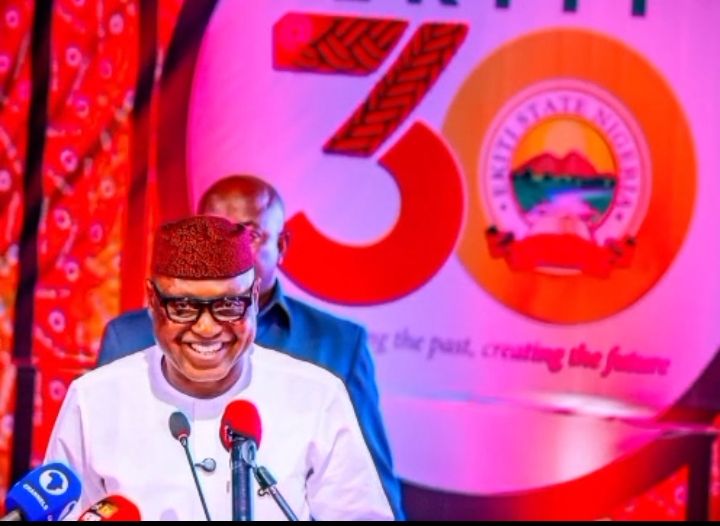
Reflecting on the Past, Engaging the Present and Creating the Future
By Amb. S. YASIR ABIOLA

Introduction
When opportunity comes, are you prepared?
That question set the tone for my participation in the Ekiti @30 Future Summit, held on Wednesday, 7 October 2026, in Ado-Ekiti, as part of activities marking the 30th anniversary of the creation of Ekiti State.
Thirty years is more than a milestone. It is an opportunity to look back with gratitude, examine the present with honesty and, most importantly, determine the kind of future we want to build.
The summit provided that opportunity.
It brought together government officials, intellectuals, professionals, young people, community stakeholders and other citizens to reflect on Ekiti’s journey and engage in conversations about the future of the State.

The official vision of the anniversary is particularly significant: to use Ekiti’s 30th anniversary as a launchpad for a 30-year transformation agenda, with the ambition of creating a more productive, innovative, technologically driven and economically prosperous Ekiti.
Celebrating the Past, Creating the Future
Ekiti State was created on 1 October 1996 after years of advocacy and struggle by Ekiti people and leaders who believed that the people deserved a state through which their aspirations could be better pursued.
Thirty years later, the question is no longer simply about how Ekiti came into existence.
The bigger question is:
What are we going to do with the opportunity that statehood has given us?
That was one of the important questions running through the Future Summit.
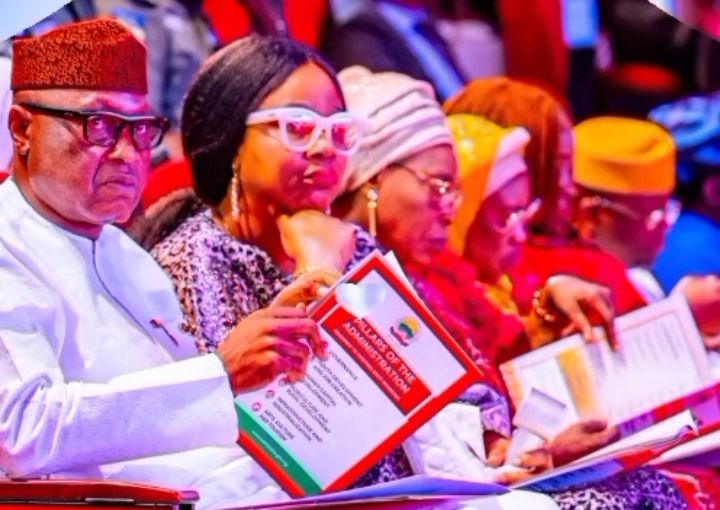
The Governor, His Excellency Biodun Abayomi Oyebanji, has described the anniversary as an opportunity to move from celebrating the past to creating the future, with a long-term ambition covering agriculture and agro-processing, innovation and technology, functional education, research and skills development, tourism and culture, youth entrepreneurship and sustainable development.
The summit therefore represented more than another anniversary event. It was an attempt to begin a conversation about the Ekiti we want to hand over to the next generation.
A Gathering of Ideas and Intellectual Capacity
One of the things that stood out for me was the quality of intellectual engagement.
The platform provided room for participants to analyse the past and present while discussing practical steps that could position Ekiti for a better future.
It reminded me that the greatest resource of Ekiti may not necessarily be its land or mineral resources, but its people — their intellectual capacity, resilience, creativity, professionalism and ability to contribute meaningfully wherever they find themselves.
But intellectual capacity must be converted into productive capacity.
A state cannot build its future merely by celebrating the number of professors, professionals, administrators, entrepreneurs or successful people it has produced.
The real question is:
How do we create an environment where more Ekiti people can become successful?
That requires functional institutions, quality education, entrepreneurship, employment opportunities, infrastructure, technology, access to capital and a system where competence and ideas can find expression.
My Participation
Among the over 500 registered participants at the summit, I was privileged to be one of the two participants given the opportunity to ask questions after the panel session.

For me, that moment was significant.
It was not simply about being given a microphone. It was an opportunity to contribute to a conversation about the future of the State I call home.
My participation reinforced a lesson I have always believed in:
Opportunity may come unexpectedly, but preparation determines what you do when it comes.
Being present was one thing.
Being prepared to contribute meaningfully was another.
The experience therefore became a personal reminder that we must continue to prepare ourselves intellectually, professionally and socially because we may not always know when the next opportunity to make a difference will come.
From Personalities to Systems
One of the major lessons I took away from the summit is the importance of building systems that can outlive individuals.
For Ekiti to truly achieve the future being discussed, developmental initiatives should not depend excessively on who one knows within the system.
A working system should be able to recognise good ideas, competence and capacity irrespective of personal connections.
The future of Ekiti must therefore be built around institutions, policies and systems that encourage merit, innovation, accountability and inclusion.
We must move from asking:
“Who do you know?”
to asking:
“What can you contribute?”
And from:
“Who is in government?”
to:
“What system are we building?”
That is the kind of institutional culture that can sustain development beyond individual administrations.
Education Must Remain Central
For me, no conversation about Ekiti’s future can be complete without education.
Ekiti has earned a reputation for intellectual excellence, but the future demands more than producing graduates.
We need an education system that develops critical thinking, character, creativity, digital competence, problem-solving ability and entrepreneurship.
Our schools must prepare young people not only to search for jobs but also to create value.
Mathematics, science, technology, vocational skills, communication and digital literacy must receive deliberate attention.
The young person in a rural community should have access to quality education and opportunity just as the young person in an urban centre does.
This is why the proposed long-term vision for Ekiti must be translated into programmes that reach the classroom, the community and the individual learner.
Young People and the Ekiti of 2056
The Future Summit also made the idea of Ekiti 2056 particularly important.
The State had earlier launched a youth essay competition asking young Ekiti people to imagine the Ekiti they want to see in 2056 and propose practical steps for achieving it. The proposed areas include education, agriculture, technology, entrepreneurship, infrastructure, healthcare, governance, tourism and environmental sustainability.
That is the right direction.
Young people should not merely be beneficiaries of development.
They should be participants, thinkers, innovators and co-creators of the future.
The Ekiti of 2056 will be shaped by decisions being made today.
The students currently sitting in our classrooms will become the teachers, doctors, engineers, entrepreneurs, administrators, politicians, researchers and community leaders of that future.
Therefore, investing in them today is not charity.
It is strategic investment in Ekiti’s future.
My Vision for Ekiti
I envision an Ekiti where education produces confident and competent young people; where technology creates opportunities beyond the traditional civil-service economy; where agriculture becomes a profitable business; where entrepreneurs can access the support required to grow; where tourism and culture are properly developed; and where government, private sector and citizens work together.
I envision an Ekiti where young people do not have to leave the State simply because they cannot find opportunities at home.
I envision an Ekiti where institutions work.
An Ekiti where good ideas are welcomed.
An Ekiti where competence matters.
An Ekiti where citizens participate actively in governance.
And, above all, an Ekiti where development is measured not merely by the number of projects commissioned, but by the quality of life and opportunities available to ordinary people.
From Summit to Action
A summit is valuable when the conversations continue after the microphones are switched off.
The real test of the Ekiti Future Summit will therefore be what happens next.
The ideas generated must be documented.
The recommendations must be prioritised.
Responsibilities must be assigned.
Timelines must be established.
Resources must be mobilised.
And progress must be measured.
If the vision is to cover the next 30 years, then it must survive beyond individual political administrations.
This requires a shared development framework that successive governments, the private sector, civil society, traditional institutions, professionals, young people and citizens can contribute to and hold themselves accountable for.
Conclusion
My participation in the Ekiti @30 Future Summit was both a privilege and a responsibility.
I went there to listen, to learn and to contribute.
I returned with a stronger conviction that the future of Ekiti cannot be left entirely to government.
Government has a major responsibility, but citizens also have a role.
Professionals must contribute their expertise.
Young people must prepare themselves.
Parents must invest in their children.
Teachers must continue to shape minds.
Entrepreneurs must create value.
Civil society must promote accountability.
And citizens must participate.
The Ekiti of tomorrow will not happen by accident.
It will be created by the decisions, investments, sacrifices and collective actions of people today.
As we celebrate Ekiti @30, the most important question is no longer only where are we coming from?
It is:
Where are we going, and what are each of us doing to get there?
The Future Summit has opened the conversation.
Now, the work must begin.
Ekiti at 30 — Celebrating the Past, Engaging the Present and Creating the Future.
