
By Our Correspondent
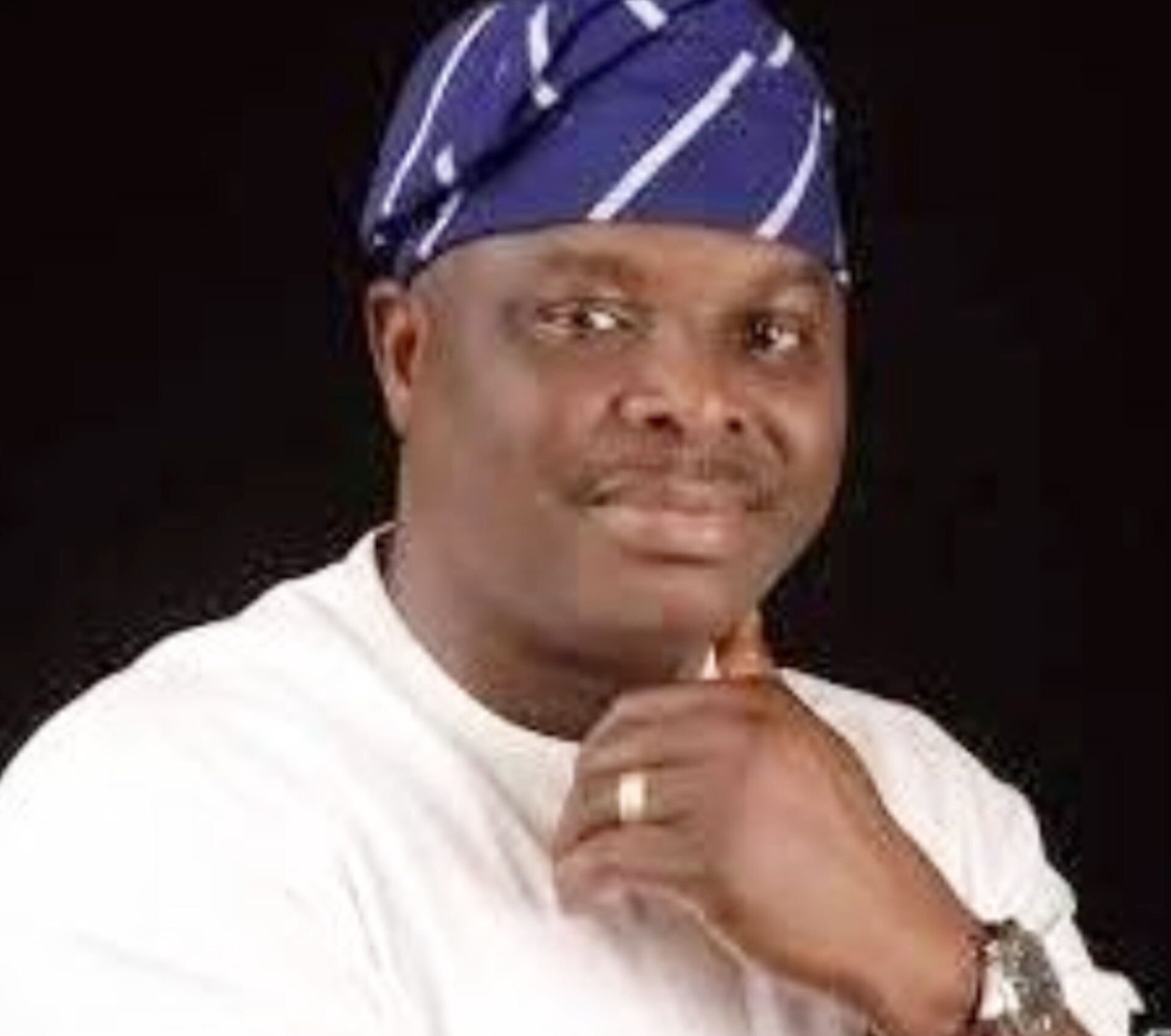
As political activities intensify ahead of the next electoral cycle, attention is increasingly shifting toward the records of public office holders and the measurable impact of their representation. Among those whose constituency activities have generated a broad list of legislative interventions, infrastructure projects, empowerment programmes and community initiatives is Hon. Fatoba Olusola Steve, representing the Ado-Ekiti/Irepodun-Ifelodun Federal Constituency.
Available records attributed to the legislator show interventions spanning legislation, education, healthcare, infrastructure, agriculture, youth development, employment facilitation, social support and community development.
Legislative Representation
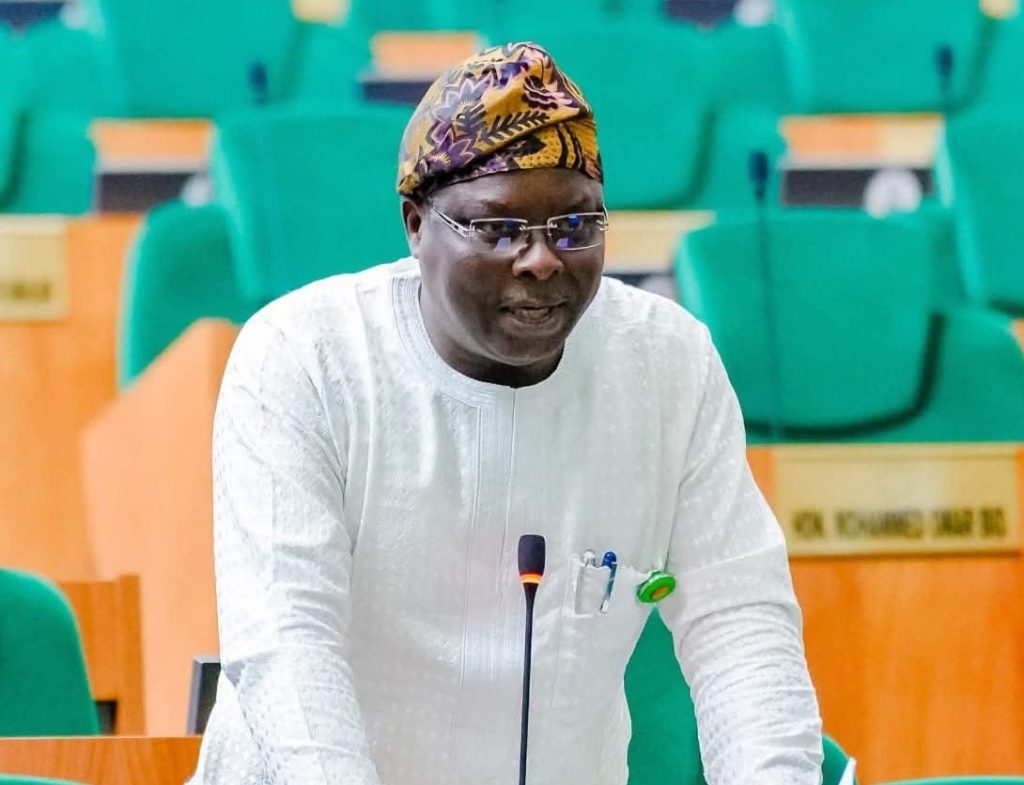
At the National Assembly, Fatoba is credited with sponsoring or supporting several legislative initiatives directed at institutional development and social welfare. These include bills seeking the establishment of the Federal College of Nursing and Midwifery in Ado-Ekiti, the National Rice Production, Processing and Research Institute in Igbemo-Ekiti, and the Root Crops Production and Research Institute in Igede-Ekiti.
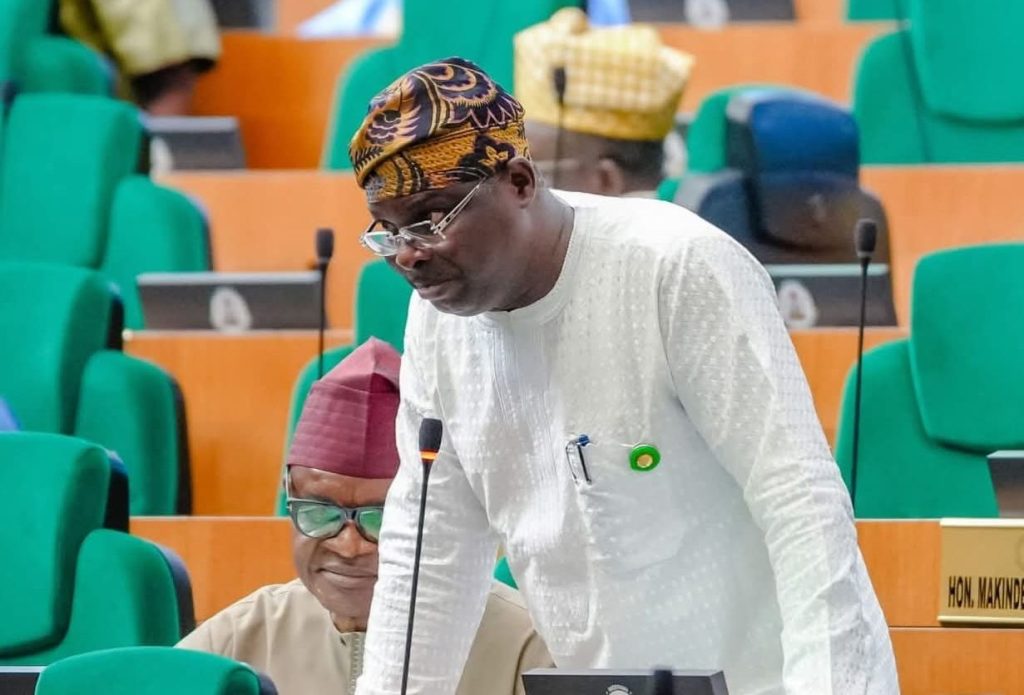
Another legislative intervention cited in the scorecard is a bill to amend the Nigeria Correctional Service Act to establish a trust fund aimed at the reformation, rehabilitation and reintegration of inmates.
His listed motions also cover issues including flood disasters, alleged extortion of truck operators and port users, telephone subscribers’ privacy and financial security, bank lending practices and the proposed privatisation of the Niger Delta Power Holding Company.
Education and Human Capital Development
Education constitutes one of the most extensive areas of intervention in the scorecard. Several secondary and primary schools across the constituency are listed as beneficiaries of classroom construction, renovation, ICT facilities, furniture, instructional materials, laboratory equipment, generators and school uniforms.
Among the listed projects are ICT centres at Christ’s School, Ado-Ekiti; Ado Community High School; All Souls Anglican Grammar School; and Eyemote Comprehensive High School, Iyin-Ekiti, with some projects described as ongoing.
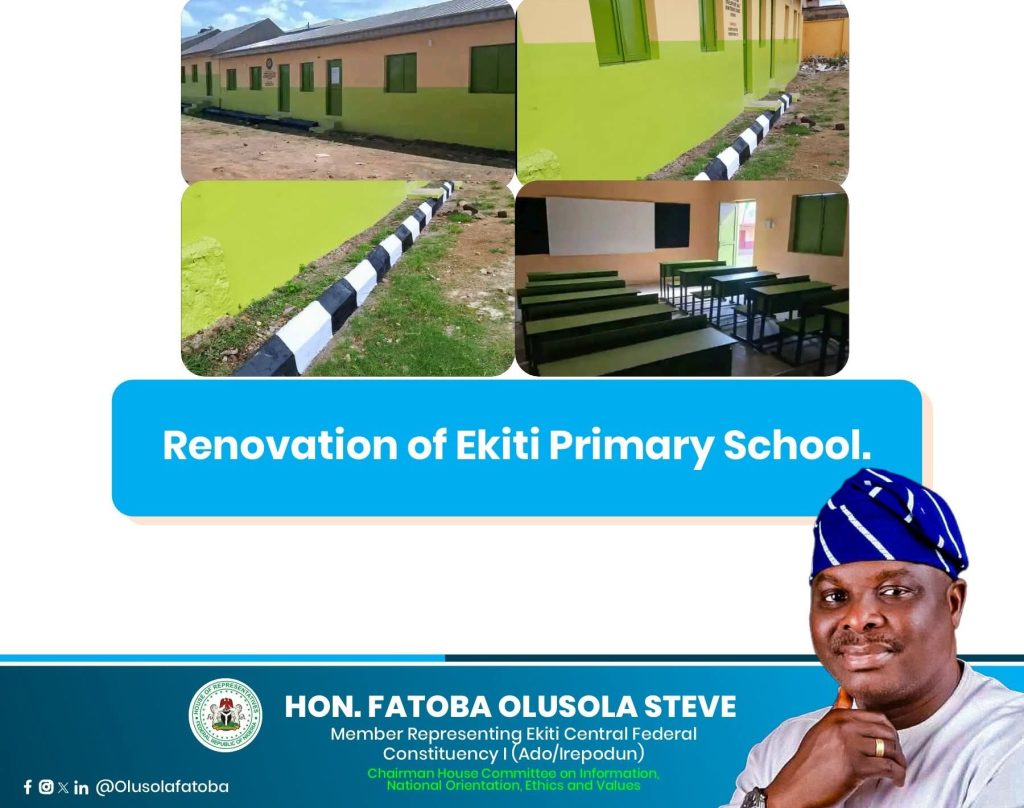
The scorecard also lists classroom projects at Ado Grammar School, AUD Comprehensive High School, Igbemo Comprehensive High School, Are/Afao Community Comprehensive High School, Awo Community High School, Ekiti Baptist High School, Science School Iyin-Ekiti and other schools.
Beyond physical infrastructure, the legislator is credited with sponsoring JAMB tutorial classes and providing educational materials to schools within the constituency.
Healthcare Interventions
Healthcare is another major component of the reported interventions.
The scorecard lists the construction and equipping of the Erelu Bisi Fayemi Health Centre at Adekunle Fajuyi (Irewolede) Estate, Ado-Ekiti, described as an EKSUTH annex, alongside the installation of solar power infrastructure for the facility.
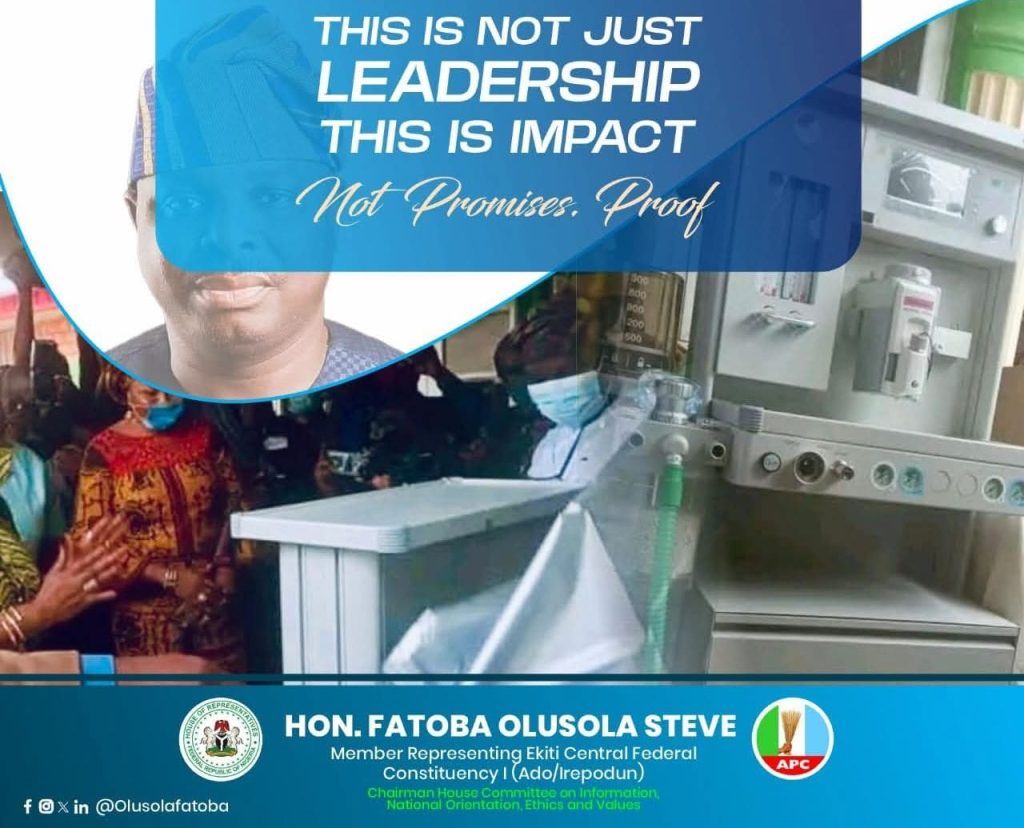
Other listed interventions include the donation of a cancer scanning machine and two anaesthesia machines to EKSUTH, renovation of the primary health centre in Are-Ekiti and the organisation of free medical outreach programmes.
During the COVID-19 lockdown, the scorecard further records the distribution of hand sanitisers, nose masks and food items to constituents.
Infrastructure and Community Development
The constituency record also contains a substantial list of physical infrastructure interventions.
These include road construction and asphalting, drainage works, interlocking projects, grading of farmsteads, construction of lock-up shops, town-hall completion and renovation of community facilities.
Among the listed projects are the construction and asphalting of an 800-metre road at Isinla Community in the Textile Area of Ado-Ekiti, drainage works at Idi-Aagba along Ilawe Road, the Olorunda Interlocking Road Project and various classroom and community projects.
The scorecard also identifies support for transformer installation and electrification projects in communities including Ita-Oro, Irona Tuntun/Oke-Osun, Olorunda and Ogbon Oba/Ereguru.
Water and Solar Energy Projects
Access to water and electricity also features prominently in the reported interventions.
The legislator is credited with providing solar-powered boreholes in communities including Olorunsogo, Ago Aduloju, Aba Igbira Irasa, Odo, Igimokogo, Embassy Highland Agric Olope, God’s Land along Ilawe Road and Awo-Ekiti.
There is also a long list of locations where solar streetlights are reported to have been installed across parts of Ado-Ekiti, Iyin-Ekiti and surrounding communities.
Empowerment, Employment and Enterprise Support
The scorecard records several youth, women and small-business empowerment initiatives.
These include training and empowerment programmes for youths in technology incubation and solar installation, distribution of HP laptops, support for artisans and market women, provision of hair clippers to barbers, vulcanising machines to selected vulcanisers and various forms of cash and equipment-based empowerment.
Agricultural beneficiaries are also listed, including farmers trained or supported in cocoa production, poultry farming and catfish farming, alongside the distribution of cocoa seedlings, spraying equipment and other farming inputs.
The record further lists beneficiaries of N-Power, COVID-19 NIRSAL loans, Survival Fund and other government-linked programmes facilitated through the constituency office.
Employment Facilitation
According to the supplied scorecard, 70 federal employment appointments were facilitated across agencies and institutions including the Nigeria Broadcasting Commission, Nigeria Television Authority, NSITF, Nigeria Security and Civil Defence Corps, NDLEA, Correctional Service, Nigeria Police Force, Federal Road Safety Corps, National Population Commission and Federal Polytechnic, among others.
The record also mentions the recruitment of N-Power independent monitors and additional beneficiaries of the N-Power programme.
Support for Vulnerable Constituents
The constituency interventions extend to persons living with disabilities and communities affected by disasters.
The scorecard lists the provision of wheelchairs, sponsorship of handicraft training for 20 persons and facilitation of relief materials through the National Emergency Management Agency for victims of flooding and other natural disasters.
A 2021 mega empowerment programme is also listed, involving motorcycles, sewing machines, generators, deep freezers, grinding machines and cash empowerment.
2026 Business Support Programme
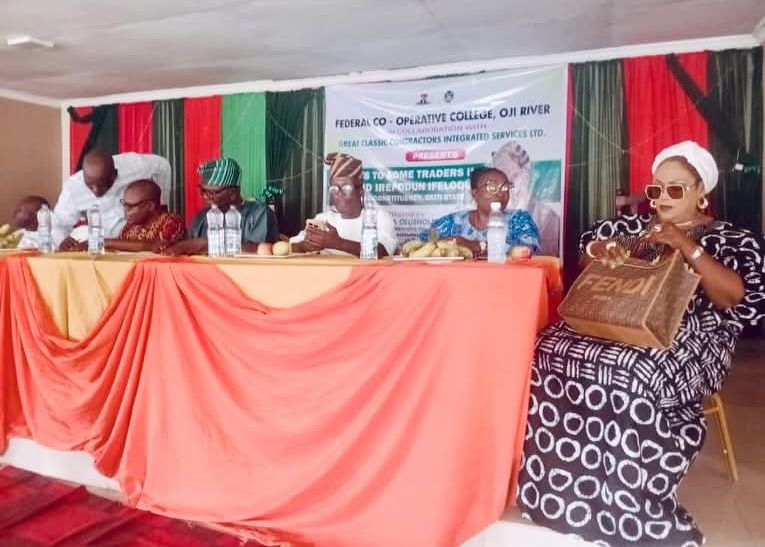
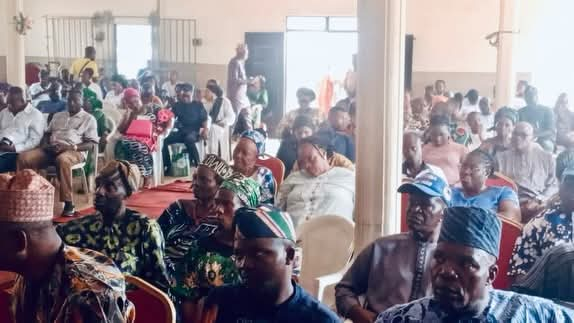
More recent interventions attributed to the legislator include a ₦100,000 cash grant for 200 traders across Ado-Ekiti and Irepodun-Ifelodun, representing a reported total of ₦20 million in direct business support.
The scorecard also lists continued financial assistance and constituency support programmes.
A Record of Representation: Projects, People and Impact
The breadth of interventions attributed to Hon. Fatoba Olusola Steve reflects a representation anchored on both legislative engagement and practical constituency development. From bills and motions at the National Assembly to projects in education, healthcare, roads, water, electricity, agriculture and community infrastructure, the interventions cut across several areas of everyday life.
Beyond physical projects, the record also highlights direct investment in people through youth training, business support, agricultural empowerment, employment facilitation, educational assistance, healthcare outreach and support for vulnerable members of the constituency.
For many constituents, effective representation is ultimately measured not only by what is said in legislative chambers, but by how representation translates into opportunities, infrastructure and improved conditions within the constituency. On that basis, the extensive list of interventions credited to Hon. Fatoba presents a record centred on people, projects and purposeful representation.
As the political conversation progresses, the focus is therefore likely to remain on continuity, completed projects, ongoing interventions and the next phase of constituency development. For Hon. Fatoba, the record provides a foundation upon which his years of legislative and community engagement can be assessed.
