
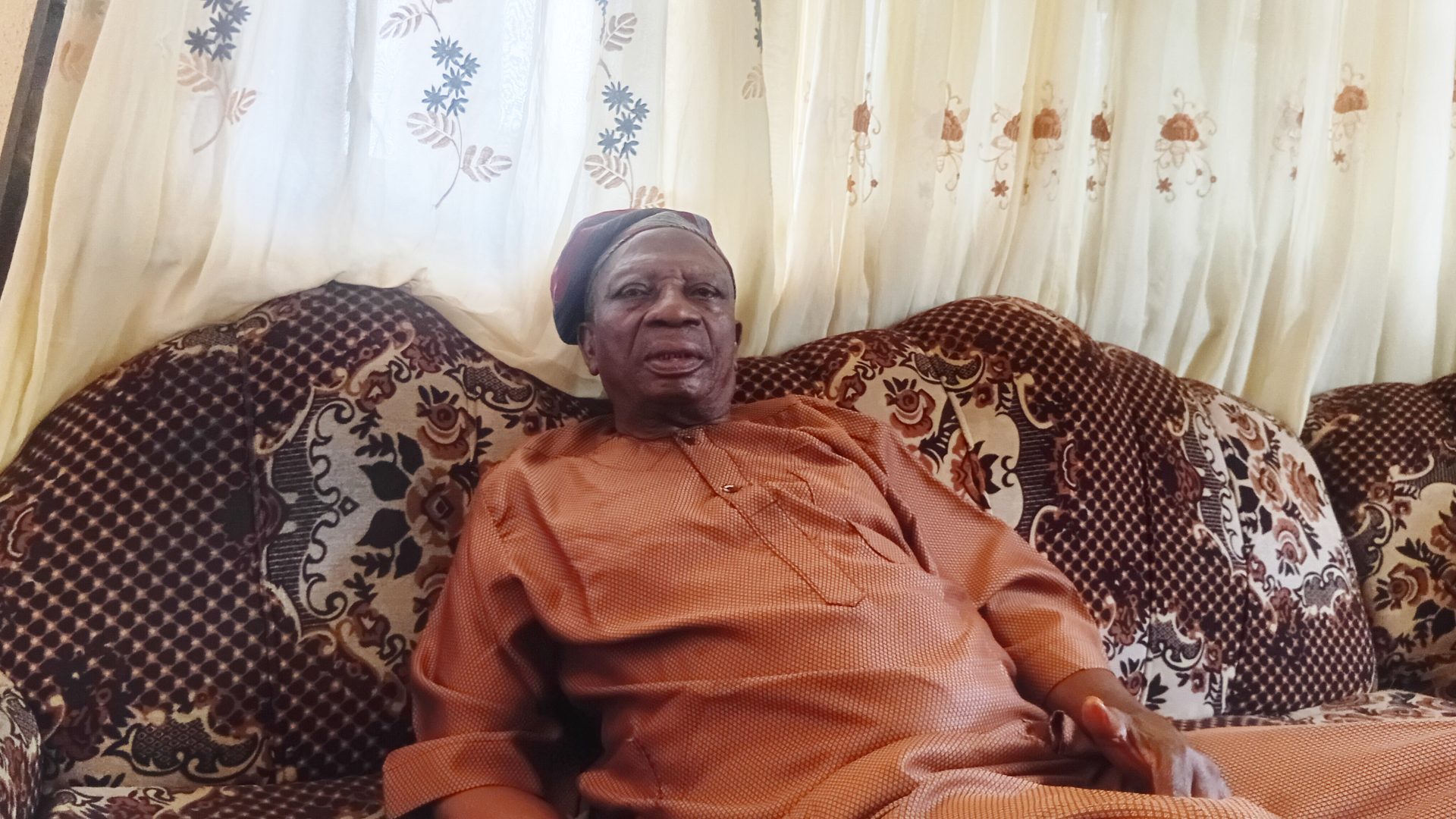
Pa Francis Odu recalls Udiroko, Eetado, old masquerade traditions, horse riding and a more accountable political culture
By Mature Minds Digital Radio TV
At 84, Pa Francis Olusola Odu carries memories of an Ado-Ekiti that existed long before many of today’s landmarks, political realities and social practices took shape.
From traditional festivals and masquerade processions to farming, politics and the relationship between political representatives and the people, the Ado-Ekiti elder has offered a glimpse into the town’s past and the values that shaped his generation.
Pa Odu shared these memories when a crew from Mature Minds Digital Radio TV paid him a visit on Tuesday, September 1, 2026, as part of efforts to document the experiences of older generations and preserve aspects of Ado town’s oral history.
From Ile Abiye Hospital to Farming
Pa Odu completed his formal education in 1963, an educational attainment he described as comparable to the level of a secondary school leaver today.
A year later, in 1964, he began working as a clerical assistant at Ile Abiye Hospital. He later worked as a plumber before eventually devoting himself to farming.
Farming, he explained, was not new to him. He had assisted his father on the farm from an early age before establishing his own farm after leaving his employment at Ile Abiye.
His story reflects the working life of a generation in which formal employment, skilled trades and agriculture often existed side by side.
When the People Saw the Ewi Only Twice a Year
One of the most striking parts of Pa Odu’s recollection was his description of the relationship between the people of Ado town and the traditional institution in the past.
He recalled that there were two major occasions when the people traditionally had the opportunity to see the Ewi of Ado-Ekiti in public: Udiroko and Etado.
According to him, Udiroko was the principal traditional festival of Ado-Ekiti, serving as the traditional New Year celebration of Ado town.
At the occasion, the Ewi would come out to meet the people, bless them and give them asala (walnut).
For Pa Odu, Udiroko was therefore more than a festival; it was an important occasion that brought the traditional institution and the people together.
Eetado: A Festival Rooted in Odo-Ado
He described Eetado as a festival particularly associated with Odo-Ado and involving six households.
During Eetado, people would proceed to Oke-Ewi and the palace area to celebrate and rejoice. The Ewi also came out during the occasion.
Pa Odu noted that while different households had other traditional activities and ceremonies, Udiroko and Etado were among the significant occasions through which the people interacted with the monarch.
The Masquerades That Once Defined Ado Town
The elder also recalled masquerade traditions that formed part of the cultural landscape of old Ado town.
He mentioned Agbo Igbeyin, which he described as the personal property of the Sasere.
He also spoke about Egun Ire, an old masquerade tradition known for its unusually slow movement towards the palace.
According to Pa Odu, Egun Ire would begin its movement from Irona and could take three weeks or more to reach the palace because it moved gradually, stopping to visit houses along the route.
He further revealed that his grandfather’s compound was one of the places associated with the emergence of the Oja masquerade.
Was Horse Riding Really a Taboo in Ado-Ekiti?
Pa Odu also offered a different perspective on the long-held claim that horse riding was traditionally prohibited in Ado-Ekiti.
According to the octogenarian, horse riding was not a taboo in Ado town.
Rather, he explained that horses were scarce because they were expensive and only people who could afford them could own and ride them.
He therefore suggested that the scarcity of horse riding in the past may have contributed to the belief that it was prohibited.
Politics in the Old Ondo Province
A lover of politics himself, Pa Odu also reflected on political life during the period of the old Ondo Province.
He recalled a political environment which, in his assessment, was characterised by trust, unity and a stronger sense of responsibility among political actors.
He cited personalities such as Professor Banjo Akintoye, who contested for the Senate, and Hon. Falaye, who contested for the House of Assembly, while reflecting on the political activities of the period.
Pa Odu said politicians and political actors were less inclined towards nepotism and favouritism in the selection and support of candidates.
Representatives Came Home to Report to the People
One of the practices he particularly remembered was the relationship between elected representatives and their constituents.
According to him, representatives serving in Lagos would return home and brief the people about developments and happenings concerning governance.
He expressed concern that this culture of regularly returning to the people to give account has largely disappeared from contemporary politics.
He also recalled the era of Pelupelu, when traditional rulers would come together to discuss the needs and interests of their respective territories.
For the elder, such interactions demonstrated a closer connection between leadership and the people.
His Message to Today’s Youth
Pa Odu urged young people to acquire practical skills alongside their formal jobs, stressing the importance of being productive and self-reliant.
He also urged youths not to allow the pursuit of money to overshadow their responsibilities to their families.
Recalling an important lesson from his father, Pa Odu said he was warned from a young age never to become a convict because criminality could tarnish not only an individual’s name but also the reputation of the entire family.
The warning, he said, influenced the way he and his siblings approached life, making them more careful, serious and hardworking.
His philosophy remains straightforward:
“Doing good pays.”
Preserving the Memories of a Changing Ado Town
Pa Francis Odu’s recollections offer more than memories of his personal journey. They provide a window into an Ado town where traditional festivals served as major points of contact between the monarch and the people, masquerades moved through the town as part of established cultural practices, and political representatives were expected to return home and account to their constituents.
As Ado-Ekiti continues to evolve, stories from elders such as Pa Odu provide an opportunity for younger generations to understand where the town has come from and reflect on which values and traditions deserve to be preserved.
For Mature Minds Digital Radio TV, the visitation underscores the importance of documenting the voices of those who lived through different chapters of Ado-Ekiti’s history—before their memories become lost to time.
Visit Mature Minds Digital Radio TV on Facebook for the full interview section
